Work / Travel newsletter
Kyoto: the lost art of missing the bamboo forest
Two alternative paths to get lost and go one better
From my newsletter: tales of my travels through Japan, mostly the detours that went better than the plan.
You’re well-traveled. A true citizen of the world. Of your travel group, you were the one to identify the telltale signs pointing to Sagano’s famed bamboo grove in Arashiyama perhaps not living up to expectations. But Kyoto has plenty of awe on offer along the Katsura river.
Not planning a trip to Japan just now? Enjoy the photos and chuckle at the ridiculous complaints. Also, check out my Instagram account for more of both.
In this issue
- A bamboo grove
- A temple
- A hike
A dream of Arashiyama
Busy streets, baseball caps and selfie sticks. The way leading up to the Arashiyama bamboo grove is filled with potential new friends — not too many of them Japanese, save for the chefs, shop- and innkeepers. All are walking in the same direction and, as trees start to cast welcome shadows on the asphalt, you wonder when the last time you had to queue to enter a forest was, or if in fact you ever did.
You thought you had arrived early enough. But there’s no turning back as you’re already entering the grove.
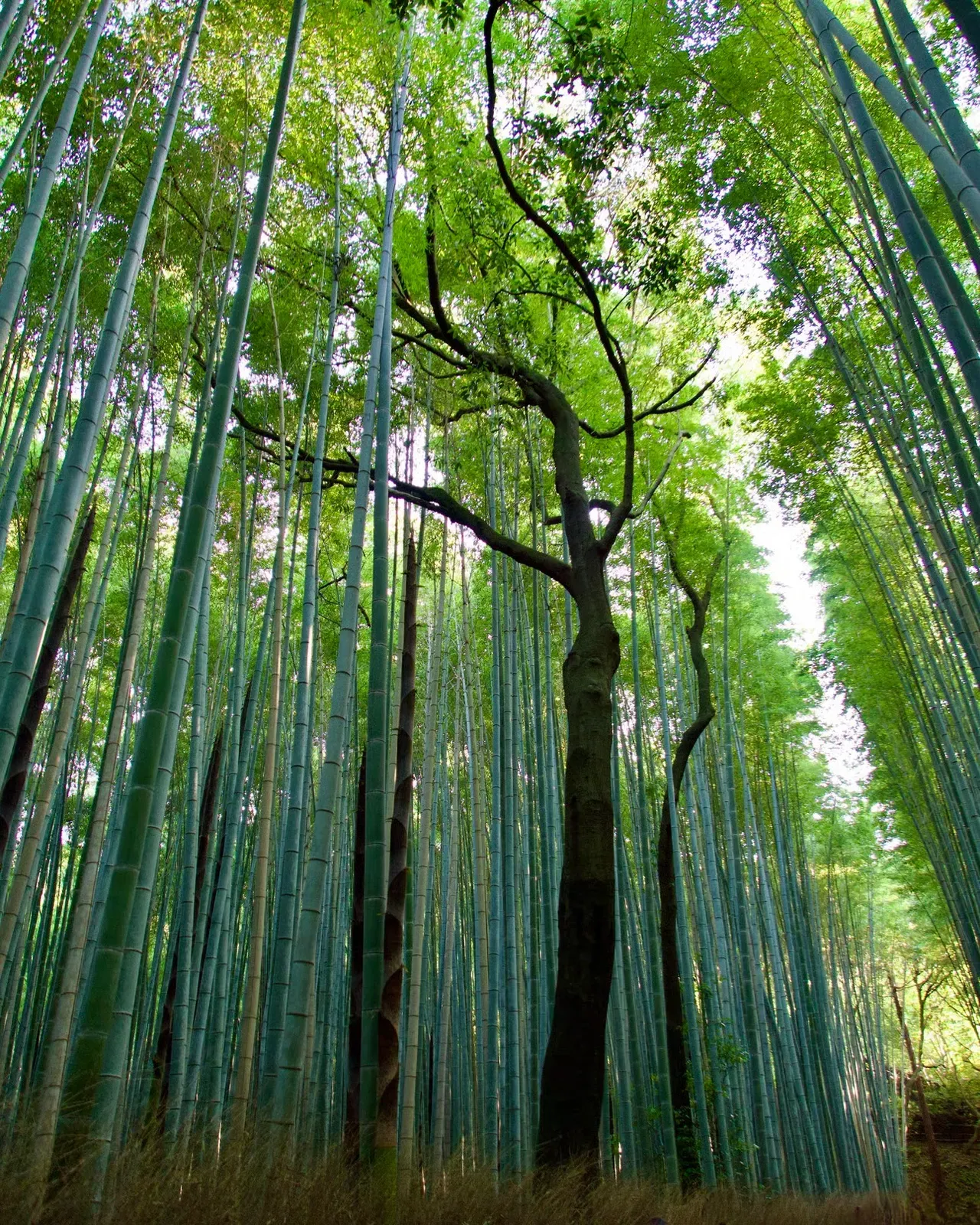
Bamboo everywhere — doing OK so far! But barriers separate the trees from the straight path you and the others are supposed to follow, preventing all and any form of evasion — or wonder.
On the hard ground grows another type of tree — black, silver or gunmetal gray, with branches of stainless steel and iPhones in lieu of leaves. In postmodern Kyoto, tripods are part of the local flora. Visitors spare no expense to capture the ultimate photo of themselves, alone against the storied forest as a backdrop — even if portrait mode scrubs it with a computer-generated blur. AI will help remove anyone else that’s not us.
It’s too much, you think. After the forest comes one of the temples where people carve their initials in century-old wooden beams with a knife (note that they do that directly into the bamboo trees too) and you’d rather avoid it now. You want to turn back, but the crowd is too dense, the fragile tripods are but one clumsy movement away from falling, and there’s only so many languages you know how to apologize in.
Your head starts to feel light, and the trees dance around you as you tilt your chin up. Fade to black. You open your eyes, comfortably installed on your hotel bed — it was all just a dream.
But you and your party are to visit Arashiyama today. What now?
Option 1: Visit the Daihikaku Senkōji Temple instead
In this scenario, you and your group are still headed for Sagano, as planned. Whether you’re on the train, or a crowded bus if you’re less lucky, there’s a great day to be had.
Water under the bridge
In a previous issue, I mentioned how taking the wrong turn near any touristic hallmark could land you in a beautiful, less-crowded spot instead. Daihikaku Senkōji temple (here it is on Google Maps) is proof of that.
Start by missing the right turn to Sagano forest to end up on Togetsukyo Bridge (here on Google Maps). You’re on the correct path.
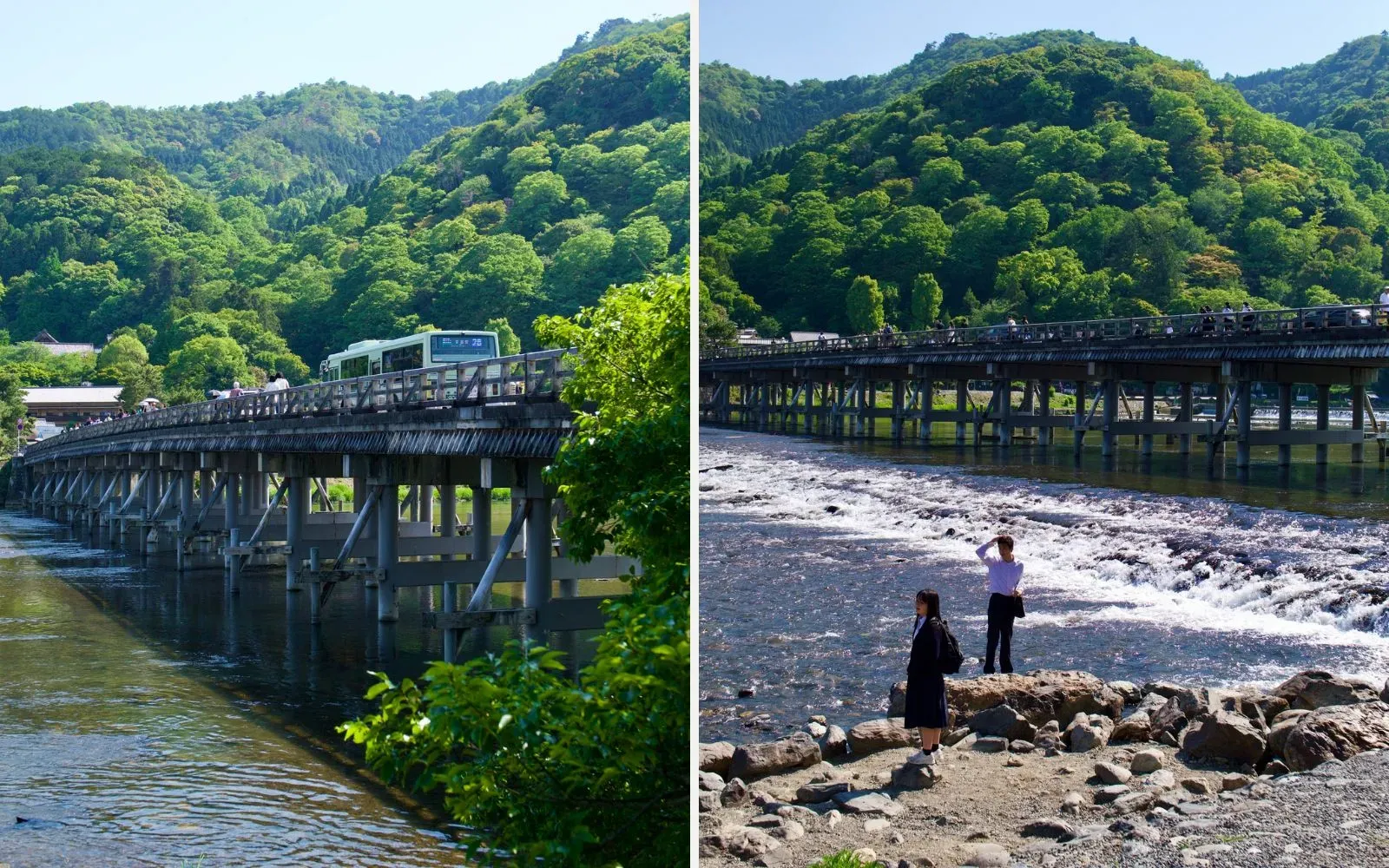
Interesting encounters along the Katsura river
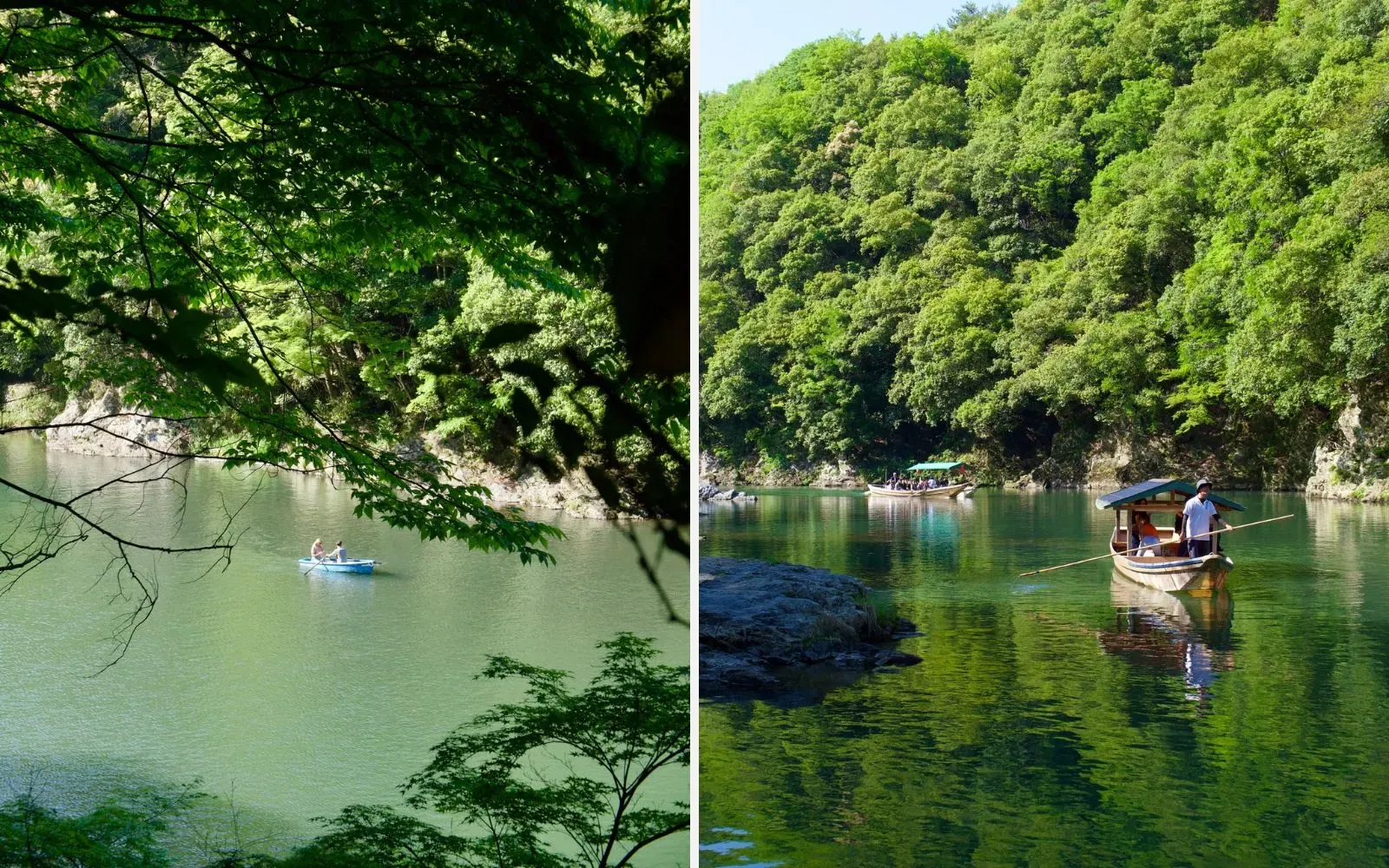
From there, the walk up the Katsura river is already a treat in and of itself. It is a fairly short one until you reach the base of the temple grounds, and perhaps an opportunity to enjoy a slower pace underneath the shade of the trees.
Street food stalls border the path, and some even float on the river to sustain those who rent rowboats — no need to binge beforehand.
Matcha shortages: I’m doing my part
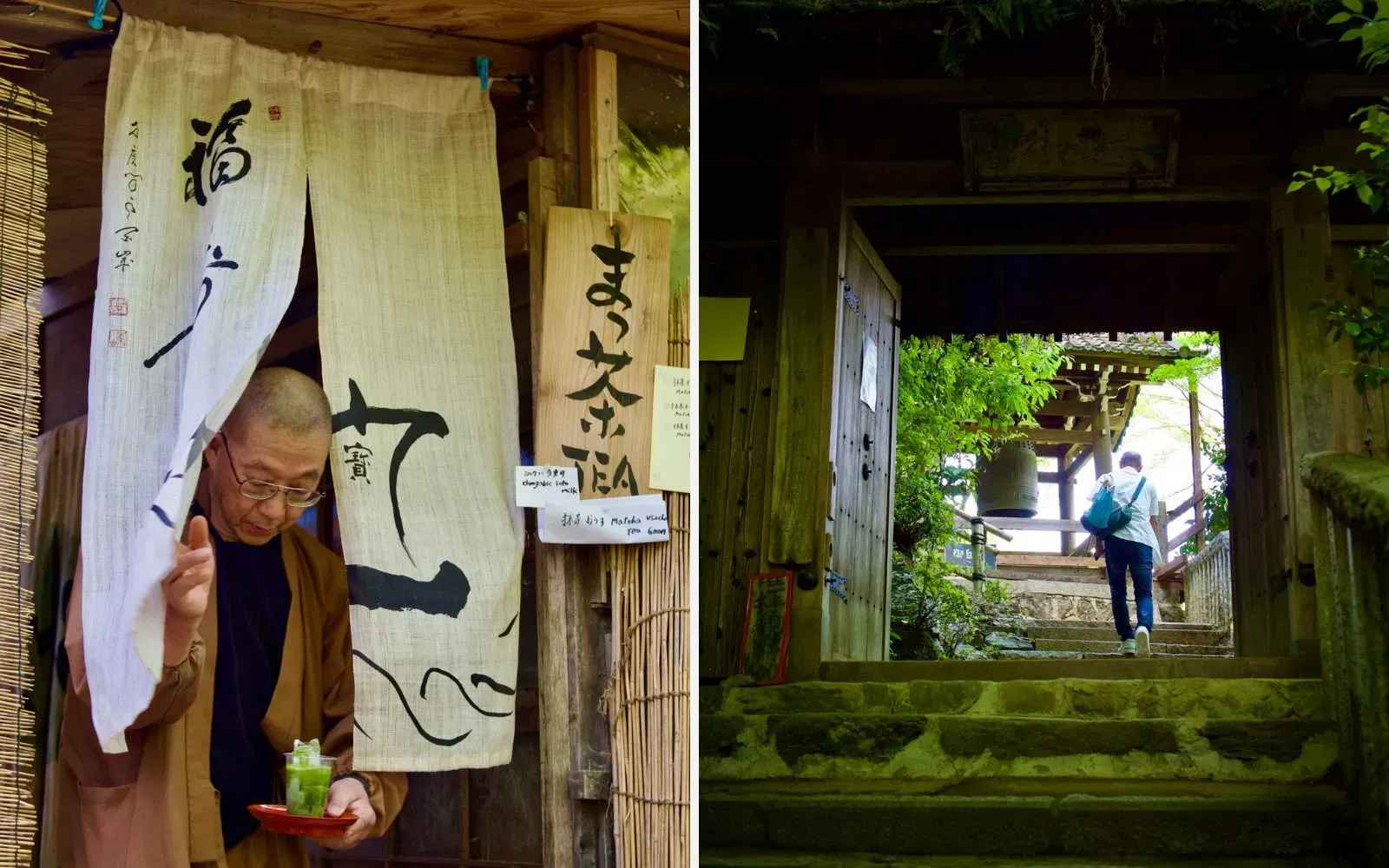
Plenty of stairs, as with most things Kyoto, take you to the temple. Once you’ve reached it, you’ll get the opportunity to chug down a small iced matcha latte before spending time in the main part of the complex.
While neither particularly flavorful nor an outstanding value, there is something about the hillside hospitality of a man dressed in traditional garment that makes about anything taste more rich. It pairs well with the faint fragrance of incense that emanates from the grounds.
Sympathy For The Hard Of Contemplating
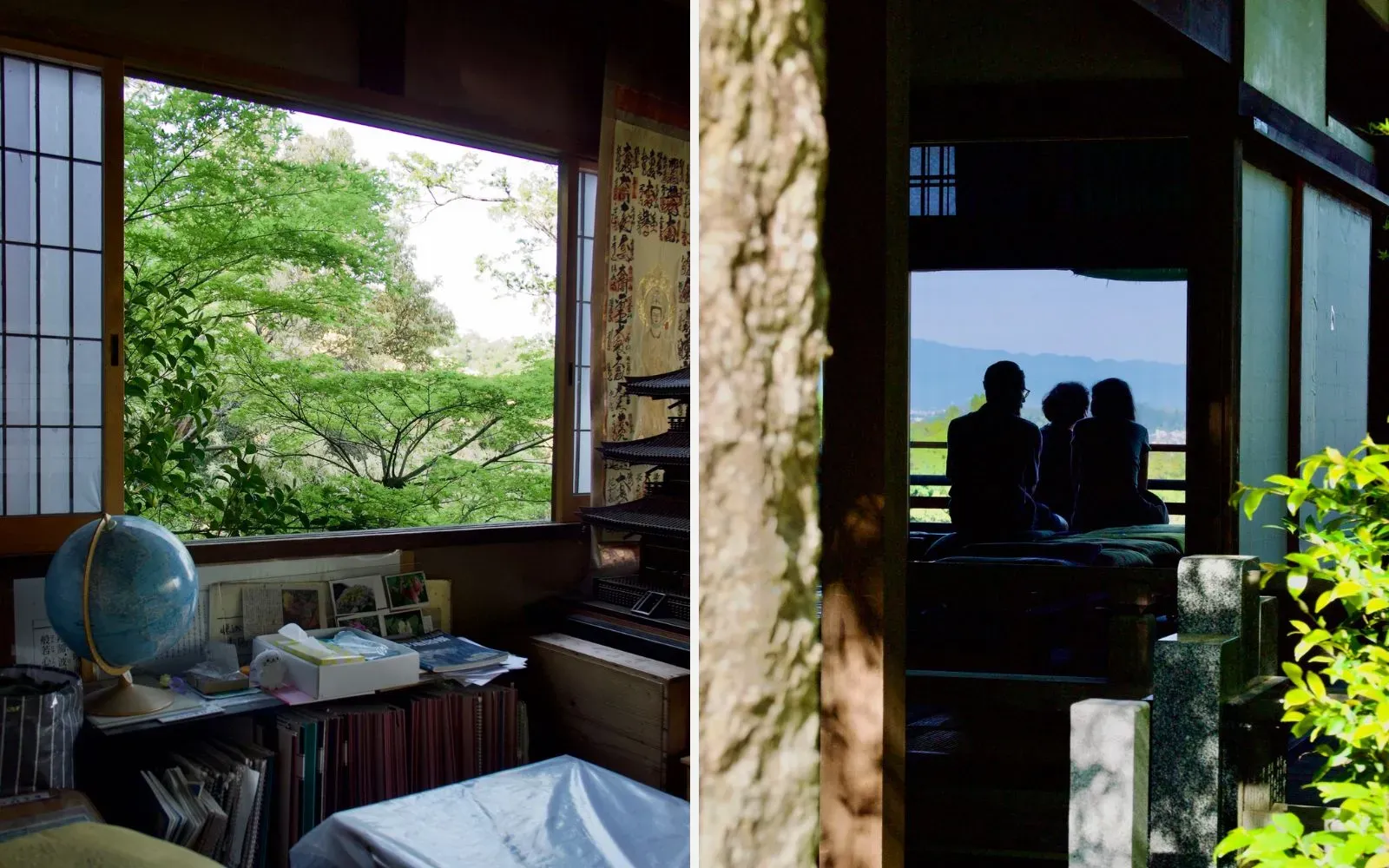
The main event is the tatami-floored cabin/prayer room/there-is-possibly-a-better-term-for-it. An artful mess of books, ventilators and the scale model of a famous pagoda, it does a fantastic job at inviting everyone to play along and slow down for a minute.
Here, a young couple is sitting on cushions, legs crossed. Facing each other with their eyes closed, they’re holding hands while sharing a pair of headphones — and a moment — listening to what I can only assume is a guided meditation. There, a family of four is sitting on the ledge of the cabin, taking in the views — in a silence they all look perfectly comfortable in, even the young ones.
I found a little spot on the small wooden platform, and I too whipped out my earbuds, noise cancellation turned off. I listened to a voice telling me to picture a ray of light spreading warmth throughout my body. Colorful fabric strips danced before me, adding a welcome sense of movement to the stillness of the hills on the other side of the river. I shivered, and the pain in my shoulder eased off a little.
I doubt I’ll ever be the enlightened type, but it sure was nice to pretend for a moment. I think you’ll like it here too.
Option 2: Hike down to Arashiyama
While visiting Daihikaku Senkōji takes up barely more time than the bamboo grove does, you can also make reaching Arashiyama a full-day affair if you feel so inclined — and your schedule allows for it. From Takao, walking down to and then along the Katsura river is also a fantastic way to reach the grove after most have left.
Put your Crocs in four-wheel drive
All the deets can be found on this hike’s page on AllTrails (no signup required), and the start of the hike is a direct, cheap bus ride from Kyoto Station. Signage once you’re started could be better, but keeping Google Maps open and the first link handy should sort you out.
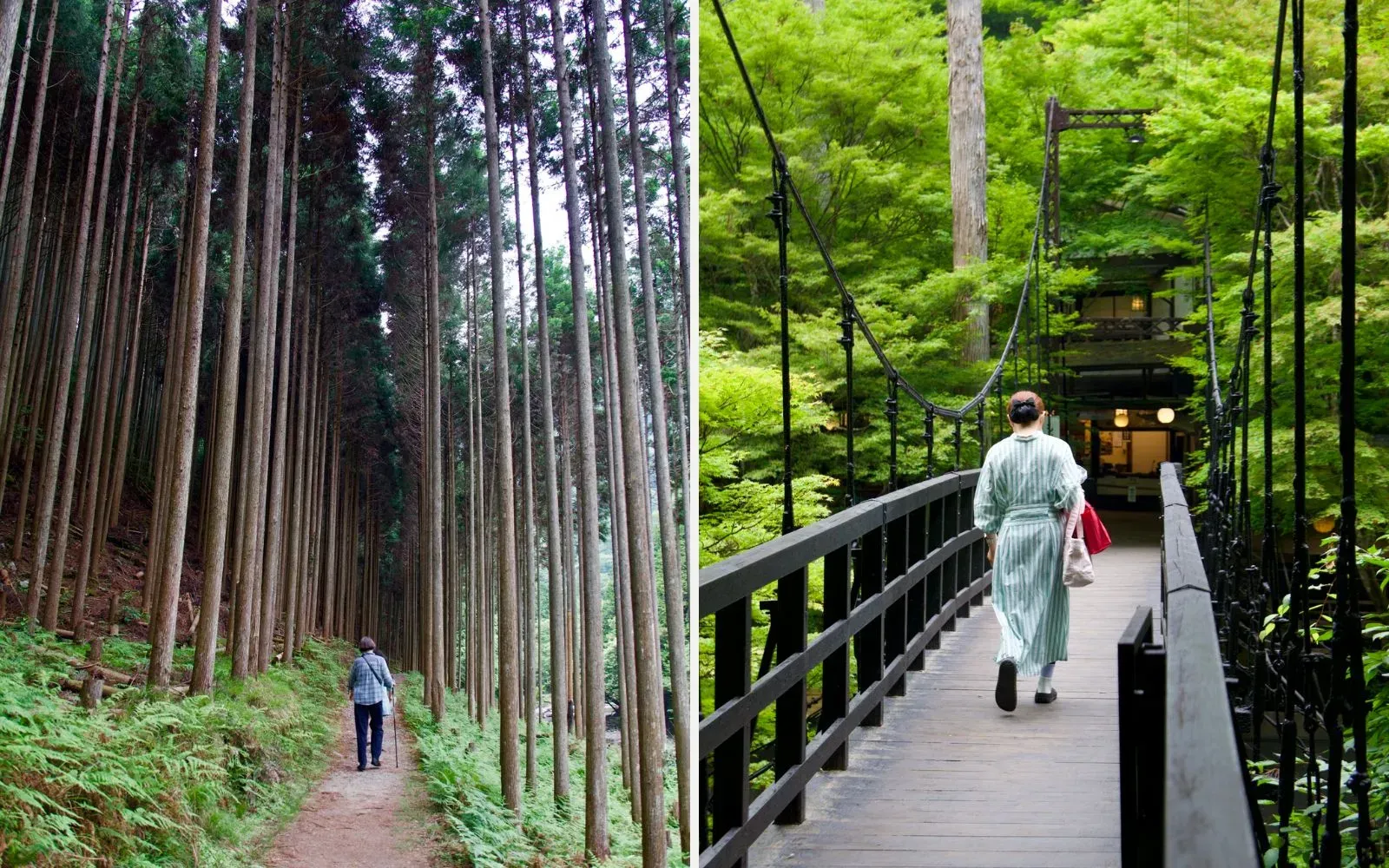
I genuinely missed the entrance to the bamboo forest, ending up elsewhere entirely, yet I made it out of this trail in one piece: don’t let the “difficult” label on AllTrails deter you. If the image speaks to you, see it as a “sneakers” type of hike, even if hiking shoes will make the ride positively more comfortable. Crocs won’t actually do.
Not quite Japan
What’s the geographic equivalent of anachronism? Google tells me it’s called anatopism. Color me learned.
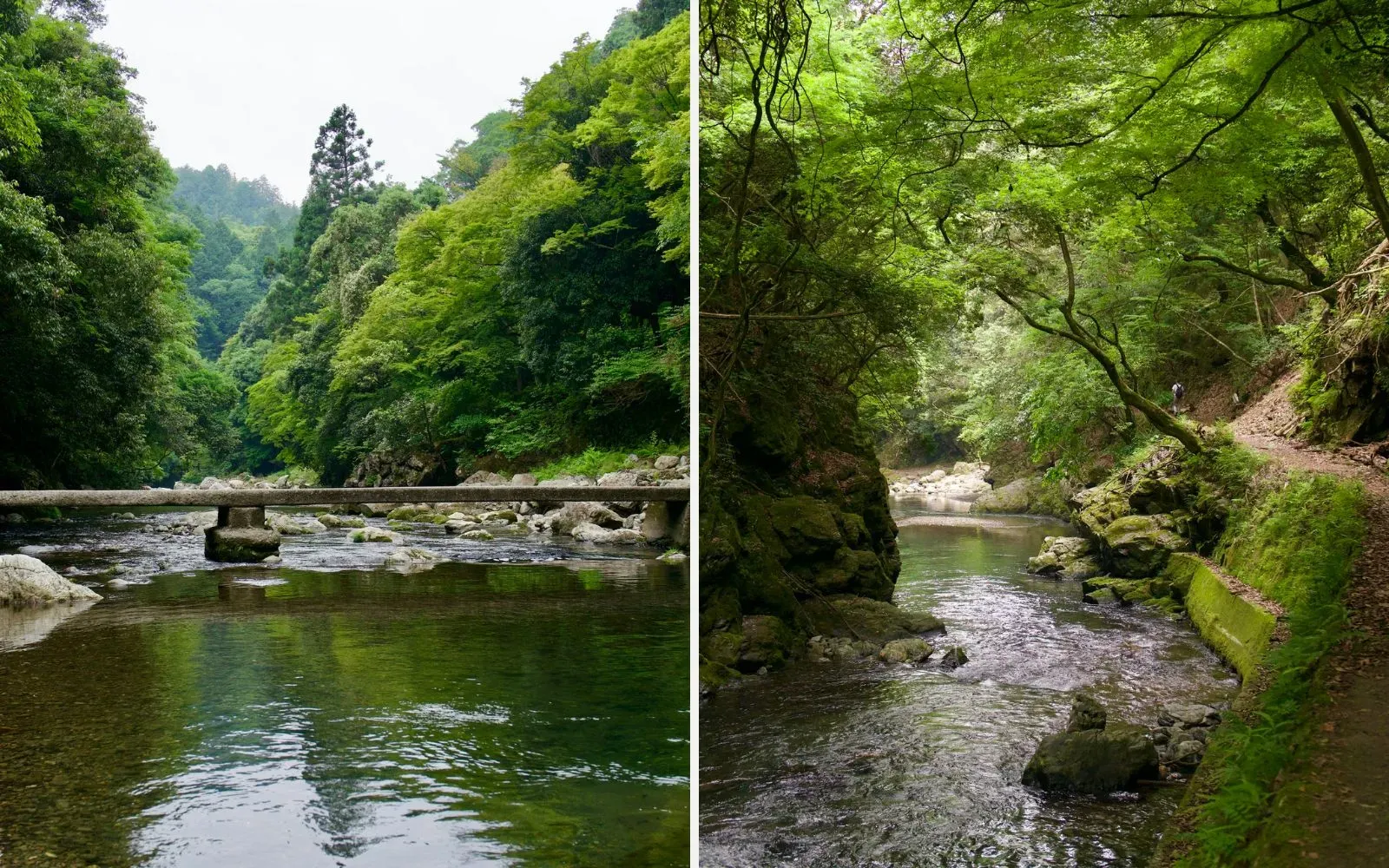
The light and other signs will crucially point back to the fact that you are still in Japan. Yet, there is something Oregonian, Stand By Me (the 1986 movie starring River Phoenix, Joaquin’s brother, not the song) about crossing a river and walking through luscious greenery.
What a perfect opportunity to whip out some Southern US tunes, new (listen to Billy Strings’ rendition of Don’t Think Twice, It’s All Right) and old (Lynyrd Skynyrd’s deliciously kitsch Tuesday’s Gone); some I had not listened to since my freshman year of high school.
I don’t think my 15-year-old, basement-dwelling self even dreamt of spending this much time in Japan. Wherever he is now, I hope he’s enjoying the ride (and spending more time outside).
Vanishing Japan
Pardon me for the continuing namedropping.
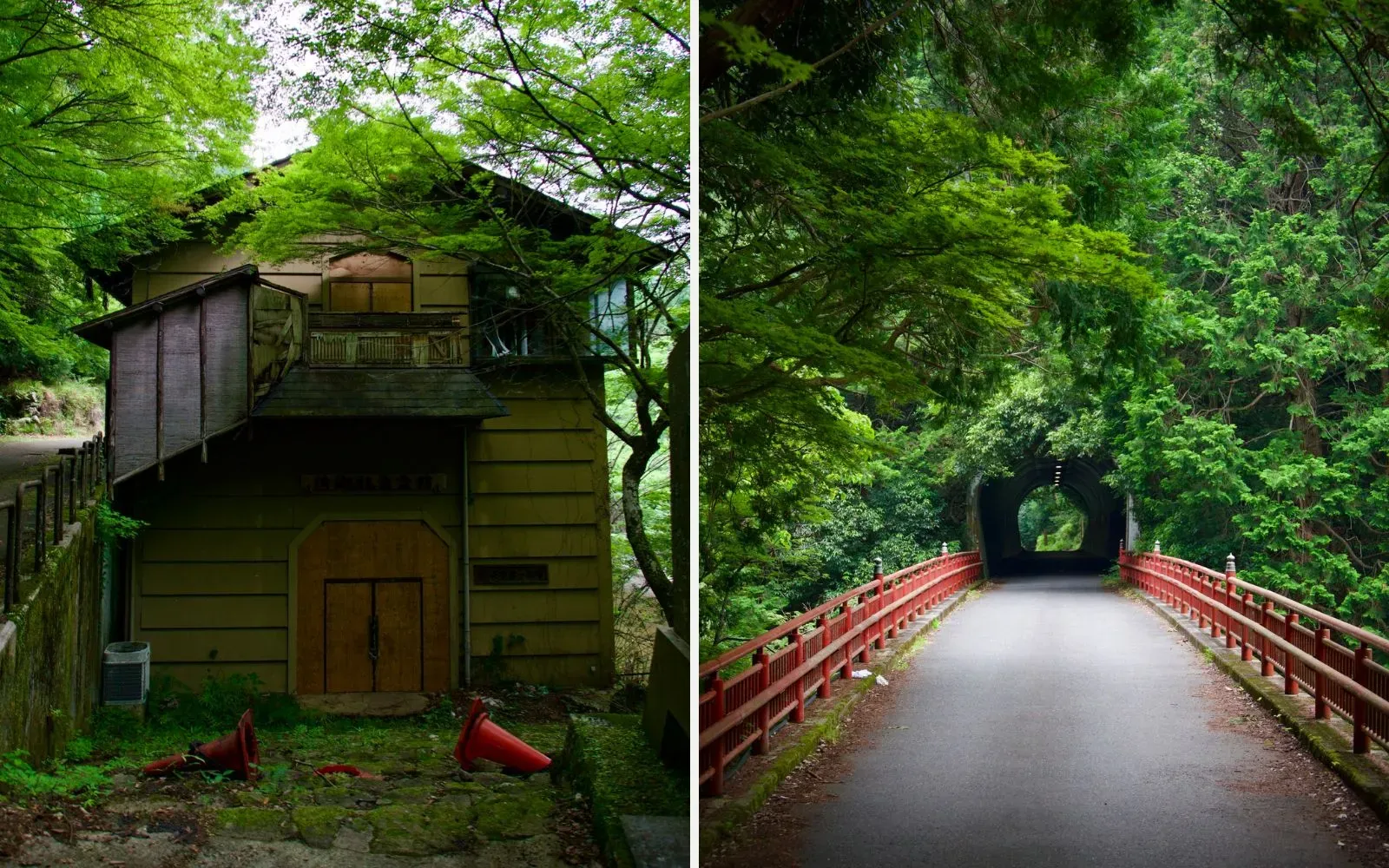
Mad Max, The Last of Us, or of course Studio Ghibli’s Castle in the Sky exemplify how we as a species obsess over imagining what the world will look like after we’ve left — or when only a few of us remain. With old bridges, broken houses and assorted structures, and most importantly copious amounts of moss, the path makes a few compelling suggestions as to what the artifacts of our presence will be like.
These abandoned spots are reminders of how Japan’s aging, city-dwelling population affects the country’s landscapes. What will the country look like, even 10 short years in the future, after the seemingly eternal chefs, shop- and innkeepers are gone?
I keep thinking back to Kevin Kelly’s Vanishing Asia photos, the oldest dating back more than 40 years. What WIRED’s founder captured then is simply gone by now. It’s only the natural order of things, but something about concrete proof makes me a little melancholic — if melancholy is what we can call nostalgia for times not yet past.
Closing the loop
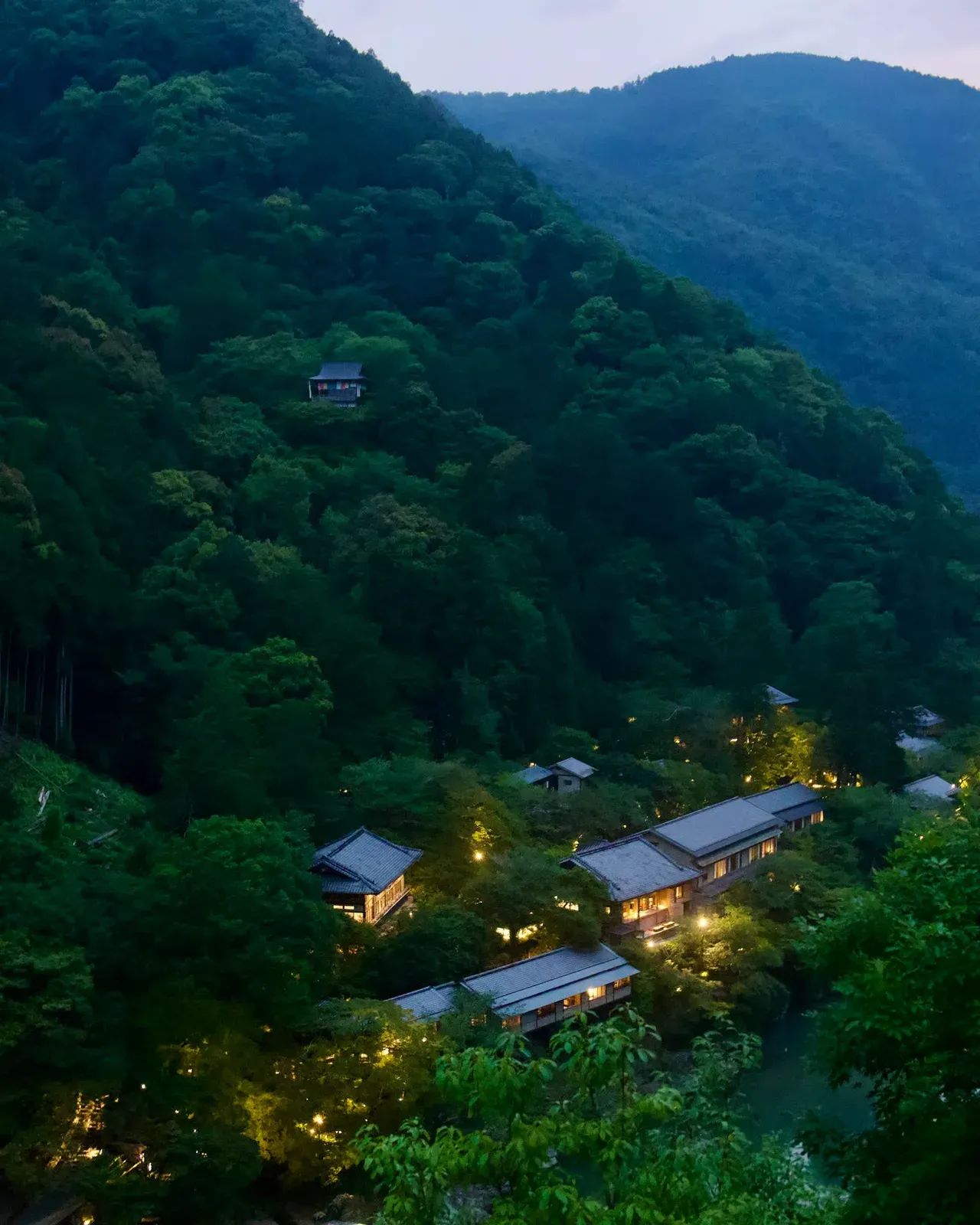
I usually wake up around noon — call it a perk of unemployment — so nightfall was already upon the Katsura river by the time I had finished the hike, despite skipping its early detour via a temple. Still a sight for sore eyes.
And see the cabin nestled in the hillside? That’s Daihikaku Senkōji Temple! Whether you have little or a little too much time on your hands, Kyoto seems to reward even the tiniest of sidesteps off the beaten path.
What a long newsletter — congrats if you made it down here! Some of you told me you found a monthly publication wasn’t enough, so what do you think about a fortnightly issue? Share your notes by hitting “Reply”, or DM me on Instagram!
Yours,
Tommy.